

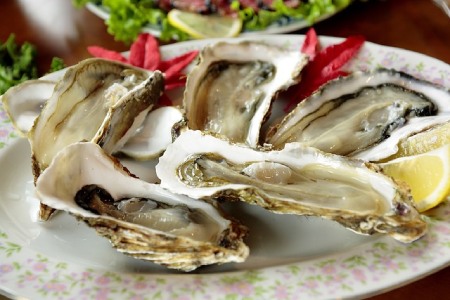
Are you planning tobuy oysters this festive season? Before buying them in Saint-Brévin or elsewhere, a few questions remain: how to choose the right oysters and make sure they’re fresh? how to open and preserve them? how to prepare them? To answer these questions and avoid making any mistakes, follow the guide!
How to choose the right oysters
To help you choose the right oysters, here are a few recommendations:
- Pay attention to the noise: when they clash, they must not sound hollow, as they must contain water;
- Check the weight of the oyster: if the shell is heavy, it contains the water it needs to survive, so you can be sure it’s alive;
- Check the general condition of the shells: not damaged, broken or open;
- Be sure to read the label if you buy a “bourriche”: it can give you valuable information on their origin, packaging date, use-by date and the name of the producer;
- Check size: hollow oysters are graded by size from 0 to 5. The smaller the value, the larger the oyster.
- Tip: To enjoy hollow oysters as an aperitif, choose oysters in size 5 (30 to 45 grams). On the other hand, for a tasting, choose 3 or 4 (46 to 85 grams), which will be of medium size.How to tell them apart There are a hundred or so species of oyster, each with different characteristics depending on where they come from, which has an impact on their taste. So it’s not easy to tell them apart! To help you differentiate between them, two types of oyster are cultivated in France: oyster creuses and flat oysters (also known as Belon). The flat oyster is distinguished by its rounder shape and more iodized taste, and there are two types of hollow oyster, depending on how they are filled into the shell. Depending on your preferences, you can opt for special oysters, with their more generous flesh, or clear fines.How to recognize an oyster that’s not fresh There are several indicators that should help you identify an oyster that’s not fresh, and thus avoid any risk of food poisoning. If, when you open the oyster, you notice an unusual smell, an oyster with no water inside its shell or flesh that is too transparent, there’s a good chance it’s dead. You can also touch the black part of the oyster with a knife to check that it is retracting properly, otherwise it’s best to throw it away.When and how to open oysters? Responsible for numerous domestic accidents every year, it’s best to take all the necessary precautions before opening oysters:
- 1. Protect your hands with a glove or thick tea towel2. Place the most pointed part of the oyster (called the hinge) towards you, with the flatter side facing up.3. Slide the oyster knife along the most rounded part of the shell up to the hinge, so as to separate the 2 shells.4. Empty the water from the shell and place the oyster on a tray. Avoid placing them on ice, which could alter the oyster’s natural flavors when tasted.
Oysters should be opened at the last minute. If you want to plan ahead, you can open oysters up to 3 hours before eating, leaving them in the fridge and keeping the two halves of the shells separate.How to store oysters Once you’ve bought your oysters, it’s best to keep them in a cool, dry place such as a garage. However, if you don’t have any, you can also put them in the vegetable crisper of your refrigerator. To avoid any risk of food poisoning, they should be kept at a temperature of 5° C for 4 to 5 days after being removed from the water, and should not be turned upside down to prevent them from losing their water.If you’d like to prolong the pleasure of tasting oysters, take a trip along the oyster trail that stretches across the Loire-Atlantique region, starting at La Bernerie en Retz near the Les Rochelets campsite to the Vendée. You can discover the expertise of seven passionate oyster farmers through a tour of their farms, ending with a tasting of freshly caught oysters.
photo@kaleido-dp/Pixabay